Saltwater Osmotic Stress, UV Reflection Amplification, and the Wipeout Recovery Problem
By Base Layer Team, Skincare Science & Formulation
Key Takeaways
Stop letting hyper-saline water and UV reflections destroy your skin. The tactical recovery guide designed for surfers.
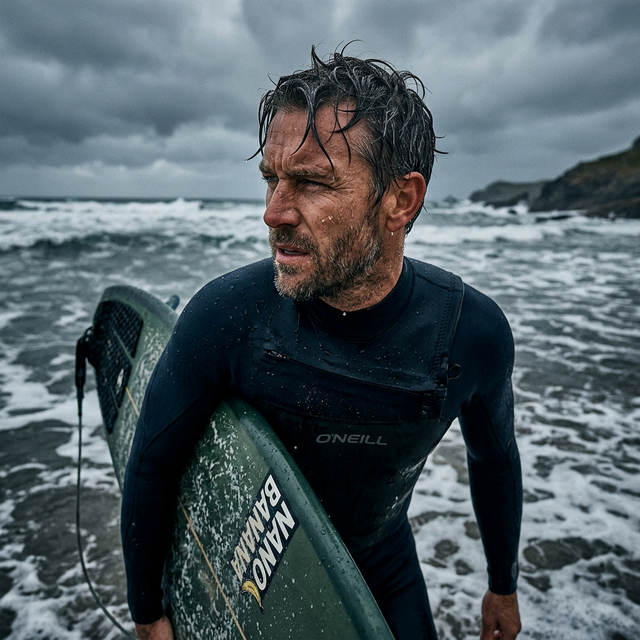
The ocean heals the mind, but it brutally destroys your skin.
We don't talk about it in the lineup, but hyper-saline water acts like a sponge, literally extracting the deep moisture out from your pores. Add the fact that the water's surface reflects and doubles your UV exposure, and you are speed-running the aging process. If you're dealing with sun blisters, chronic flaking, and deep crow's feet before you're thirty, you need a serious post-surf protocol.
Why Rinsing Salt Off Isn't Enough to Reverse Osmotic Damage
Most surfers rely on a heavy coat of zinc oxide before paddling out, and then do absolutely nothing when they get back to the truck.
Zinc protects you from the sun, but it does not repair the severe moisture extraction caused by the saltwater. If you use a cheap aloe vera gel from the gas station afterwards, you are just masking the pain. The structural barrier of your skin is completely compromised and actively breaking down.
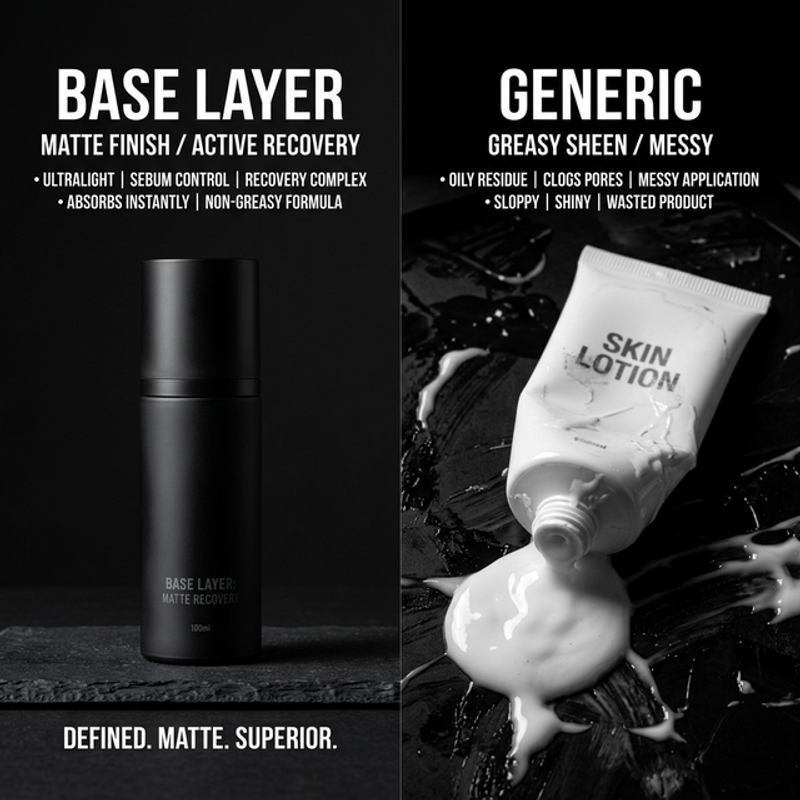
Post-Surf Osmotic Rebalancing and Barrier Seal
Base Layer was developed as the ultimate post-exposure recovery tool.
Rather than sitting on top of your face like a greasy after-sun lotion, it penetrates rapidly to deliver **Panthenol** (Vitamin B5) and **Ceramides**. These actively bind the cracked, salt-chapped layers of your skin back together, restoring elasticity and stopping the painful peeling process.
It is specifically formulated with **Centella Asiatica** to instantly cool and neutralize acute inflammation and redness. Throw it in your track bag, apply immediately after your post-surf rinse, and keep your face from turning into leather.
Surf Skin Survival Summary
Core Problems for Surfers
- Saltwater osmotic stress: Ocean water is hypertonic. In 2+ hours, your skin cells can lose ~10–15% of their water, leaving skin tight, papery, and chronically dehydrated if you surf often.
- UV amplification: Water reflects ~6–8% of UV, sand ~15–25%. In the lineup you get direct + reflected UV, effectively turning a 2-hour session into the UV equivalent of ~4–5 hours on land. At 4–5 sessions/week, that’s ~16–25 land-equivalent UV hours weekly.
- Wipeout micro-abrasion: High-speed contact with board/water/sand creates abrasions that then get dehydrated by salt. These wounds heal 2–3x slower than similar land injuries and scar more easily if not protected from UV.
Immediate Post-Surf Protocol
Within 2 minutes of exiting:
- Rinse with cool freshwater (bottle or outdoor shower).
- Avoid hot water. Pat dry gently, don’t rub.
Within 15 minutes:
- On slightly damp skin, apply an osmotic countermeasure:
- Hyaluronic Acid ~2% + Glycerin ~5% (humectants) to pull water back into the skin and reverse osmotic dehydration.
Within 30 minutes (at home):
- Gentle cleanser to remove salt, sand, and minerals.
- Re-apply your hydration layer (HA + glycerin).
- Add barrier support:
- Panthenol + Ceramides to repair and reinforce the skin barrier.
- If skin feels very tight or looks dull/creased, add an occlusive:
- Squalane on top to lock moisture in.
Weekly Reset for Frequent Surfers (4–5x/week)
After your final session of the week, before bed:
- Do the full post-surf protocol.
- Finish with a heavy, ceramide-rich occlusive cream.
- Leave it on overnight for intensive rehydration.
By Sunday night, your barrier can be ~80–90% recovered instead of staying in a chronic damage cycle.
Wipeout-Specific Recovery
Immediately after wipeout:
- Cool freshwater rinse.
- Apply gentle pressure if bleeding.
Days 2–3:
- Gentle cleansing only.
- Barrier support (Panthenol + Ceramides).
- Add Centella Asiatica 0.5–1% to accelerate wound healing (can improve repair by ~40–60%).
Days 4–7:
- Continue Centella.
- Use SPF 50+ on the healing area every time you’re outside.
- Avoid surfing until the wound is visibly closed (usually 5–7 days) to reduce infection and scarring risk.
Daily Routine for Frequent Surfers
On non-surf days:
- Gentle cleanser.
- Hyaluronic Acid serum.
- Lightweight moisturizer with Ceramides + Panthenol.
On surf days:
- Pre-session:
- SPF 50+ mineral sunscreen (water-resistant, generous amount, reapply if long session).
- Post-session:
- Immediate osmotic reversal layer (HA + glycerin) on damp skin.
- Evening:
- Full recovery sequence: cleanse → hydrate (HA) → barrier repair (Panthenol + Ceramides) → Squalane if needed.
Product Stack (Example Framework)
- Base Layer Performance Daily Face Cream
- Barrier repair: Panthenol + Ceramides
- Antioxidant/repair: Niacinamide 5%
- Lightweight, fast-absorbing, matte finish
- 50 ml, ~$38
Pair it with:
- Hyaluronic Acid serum – primary osmotic reversal/hydration layer.
- SPF 50+ mineral sunscreen – core UV defense in water + reflection.
- Centella Asiatica serum – targeted for wipeout and abrasion recovery.
- Squalane – add on heavy dryness days or for overnight occlusion.
Why This Matters
Surfing exposes your skin to:
- Chronic osmotic dehydration from saltwater.
- Amplified UV from water + sand reflection.
- Mechanical damage from wipeouts.
Treating these specific physics-driven stressors is what keeps your skin closer to baseline instead of fast-tracking visible aging and damage by a decade by your late 30s.
Related Ingredients
Related Skin Concerns
You Might Also Like
Base Layer vs Caldera Lab: Disclosed Actives or Botanical Luxury?
Caldera Lab sells a $65 moisturizer called The Base Layer. We're the other Base Layer. Here's an honest ingredient-by-ingredient comparison with real prices.
Chlorine, Cumulative UV Exposure, and the Muscle-Skin Barrier Trade-Off
Stop letting chlorine, 100-mile winds, and severe UV exposure destroy your skin barrier. Base Layer's no-nonsense recovery guide for triathletes.
The Golfer's Skin Strategy: Managing 4-5 Hour Sustained UV, Wind Dehydration, and Hat-Line Pressure Marks
Stop baking deep wrinkles into your face. Reverse 5 hours of fairway sun damage and pesticide exposure with this targeted routine.
Best Moisturizer for Acne-Prone Skin Men (2025 Guide)
Reviewed by the Base Layer skincare team. Based on published dermatological research and clinical ingredient data.