Squalane
Squalane for Men: Why Squalane Is the Oil Every Man's Moisturizer Should Have
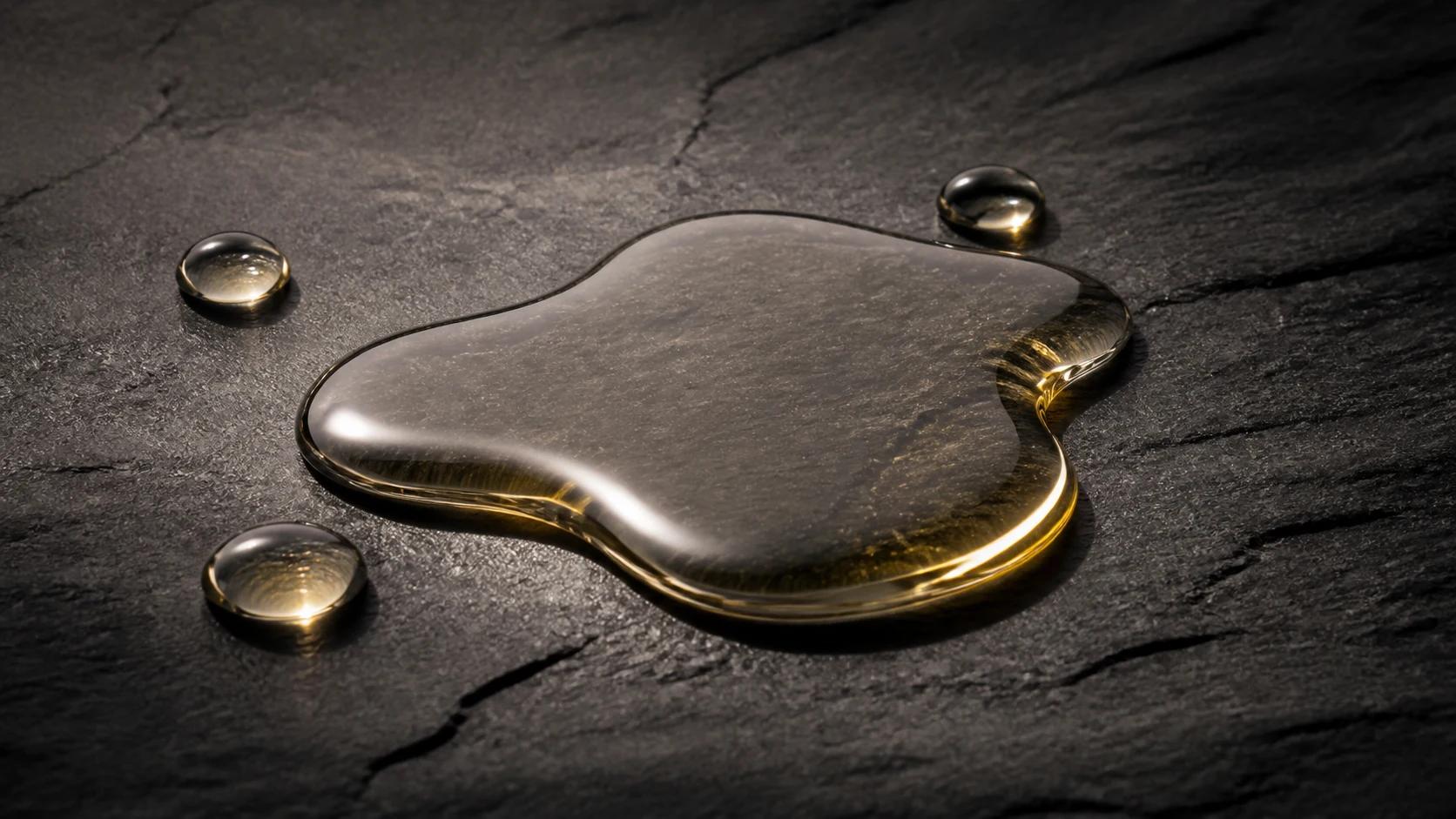
If the word oil makes you think greasy, squalane is the exception worth understanding.
What Squalane Is
Squalane is a stabilized version of squalene, a lipid your skin produces naturally as part of its protective barrier. Your body makes less of it as you age, especially after your early 30s. The synthetic or plant-derived version used in skincare is hydrogenated to prevent oxidation, which makes it shelf-stable and odorless.
It is technically an oil, but it behaves nothing like the heavy, pore-clogging oils most guys associate with that word. It is closer to the consistency of a dry serum.
Why It Feels Light
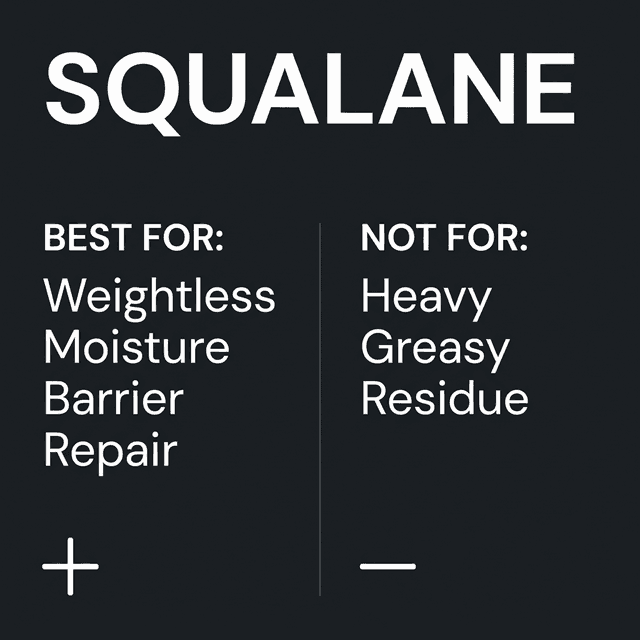
Squalane's molecular structure closely matches your skin's own oils, which means it absorbs quickly instead of sitting on the surface. It does not leave a sheen or a slick feeling. On most skin types, it disappears within 30 seconds of application.
This makes it one of the very few oil-based ingredients that guys with oily or combination skin can use without triggering breakouts or adding visible shine. It moisturizes without changing how your face looks or feels to the touch.
Who Benefits
Anyone who wants moisture without weight. Squalane is especially useful for guys whose skin gets tight after washing but whose forehead and nose are still oily by midday. That combination-skin pattern is extremely common in men and is a sign that the barrier needs lipid support, not more water.
It is also a good fit for guys who live in dry climates, spend a lot of time in air-conditioned offices, or find that most moisturizers feel too heavy by midmorning.
Where It Helps In A Formula
Squalane works as an emollient, meaning it fills the gaps between skin cells and prevents water loss. In a formula, it pairs well with humectants like hyaluronic acid, which pull water in, and occlusives, which seal the surface. Squalane sits in the middle, smoothing things out.
In Base Layer, squalane provides the lightweight moisture layer that keeps the formula from feeling like a traditional cream. It is one of the reasons the product absorbs clean and does not interfere with sunscreen applied afterward.
Myths About Clogging Pores
Squalane is non-comedogenic. Its molecular size and structure make it very unlikely to block pores. Studies consistently give it a comedogenicity rating of zero or one on the standard five-point scale.
The confusion comes from squalene with an E, the unstabilized form, which can oxidize on the skin and contribute to breakouts. Squalane with an A has been processed to remove that risk. If a product uses squalane and you break out, the cause is almost certainly another ingredient in the formula.
How It Works
Squalane is elegant because its mechanism is straightforward, but the benefits are substantial. Lipid Barrier Integration Your skin's protective barrier is composed of lipids—ceramides, cholesterol, fatty acids, and squalene. When squalane is applied, it integrates directly into this lipid matrix. Your skin doesn't have to process it or convert it. It simply becomes part of the barrier. This is different from most oils. Coconut oil, mineral oil, jojoba oil—these sit on the surface or partially integrate, but squalane matches your skin's lipid composition exactly. Result: seamless integration, zero foreign-feeling texture, genuine barrier support. Hydration Without Occlusion There's a distinction that matters: occlusion vs. hydration. Occlusive oils (mineral oil, petrolatum) form a thick seal on skin. They prevent water loss, but they also feel heavy and don't absorb. They can trap bacteria and aggravate acne-prone skin. Squalane is lighter. It's still occlusive (prevents wate
Benefits
- Higher sebum production
Men produce more sebum than women, which is why oily skin is so common in guys. Heavy plant oils and mineral oil feel suffocating and can trigger more sebum production (your skin compensates). Squalane is light enough to feel balanced, and it satisfies your skin's lipid needs without trigg
- Oily and combination skin prevalence
Most men's skin leans oily or combination. Traditional moisturizers feel greasy. Squalane provides genuine hydration and barrier support without the heavy feeling.
- Faster barrier recovery post-shave
Shaving damages your lipid barrier specifically. Squalane integrates directly into that barrier, accelerating recovery. It's not just sitting on the surface—it's actively repairing the damage.
- Athletic activity and sweat
Men who work out or sweat regularly need hydration that absorbs quickly and doesn't interfere with normal sweating. Squalane absorbs quickly and breathes with your skin.
- Compatibility with male grooming
Most men apply one product and move on. Squalane is light enough to apply and move on immediately—no waiting for absorption, no sticky feeling during the day.
Research
A 2005 study in Journal of Cosmetic Science analyzed squalane's integration into skin's lipid barrier using sophisticated lipid analysis techniques. Results: squalane integrated into the stratum corneum lipid composition within 4 hours of application. After 24 hours, it was indistinguish
Journal of Cosmetic Science (2005)
A 2012 clinical study in Dermatology Research and Practice tested squalane application on [dehydrated skin](/skin-concerns/dry-dehydrated-skin-men). Results: 35% reduction in TEWL (water loss) within 2 hours. After 4 weeks of daily use, sustained hydration improvement of 40% and visible
Dermatology Research and Practice (2012)
A 2008 study in Free Radical Research examined squalane's antioxidant capacity against various free radicals. Squalane showed measurable free radical scavenging activity, particularly against hydroxyl radicals and peroxyl radicals.
Free Radical Research (2008)
A 2007 study in International Journal of Cosmetic Science tested various oils on acne-prone skin using comedogenicity ratings. Squalane scored 0-1 on the comedogenicity scale (non-comedogenic), while coconut oil scored 4-5 and mineral oil scored 1-2.
International Journal of Cosmetic Science (2007)
A 2014 study in The Journal of Pharmacy and Pharmacology tested squalane's effect on penetration of other actives. When actives were formulated in squalane versus aqueous vehicles, penetration increased by 25-35% for hydrophobic (oil-loving) compounds.
The Journal of Pharmacy and Pharmacology (2014)
Related Articles
Base Layer vs Caldera Lab: Disclosed Actives or Botanical Luxury?
Caldera Lab sells a $65 moisturizer called The Base Layer. We're the other Base Layer. Here's an honest ingredient-by-ingredient comparison with real prices.
Chlorine, Cumulative UV Exposure, and the Muscle-Skin Barrier Trade-Off
Stop letting chlorine, 100-mile winds, and severe UV exposure destroy your skin barrier. Base Layer's no-nonsense recovery guide for triathletes.
The Golfer's Skin Strategy: Managing 4-5 Hour Sustained UV, Wind Dehydration, and Hat-Line Pressure Marks
Stop baking deep wrinkles into your face. Reverse 5 hours of fairway sun damage and pesticide exposure with this targeted routine.
Best Moisturizer for Acne-Prone Skin Men (2025 Guide)
Explore More
Aging & Wrinkles in Men
How clinical actives fight fine lines and loss of firmness.
Sensitive Skin Care for Men
Calm redness and irritation with fragrance-free formulas.
Dark Circles Under Eyes
Reduce tired-looking eyes with peptides and hydration.
Best Men's Moisturizers Compared
Side-by-side comparison of top moisturizers for men.
FAQs
Reviewed by the Base Layer skincare team. Based on published dermatological research and clinical ingredient data.