Why Men's Skin Behaves Differently
By Sam Doyle, Founder, Base Layer
Key Takeaways
Men's skin is not totally different. It is different in a few ways that matter every day.
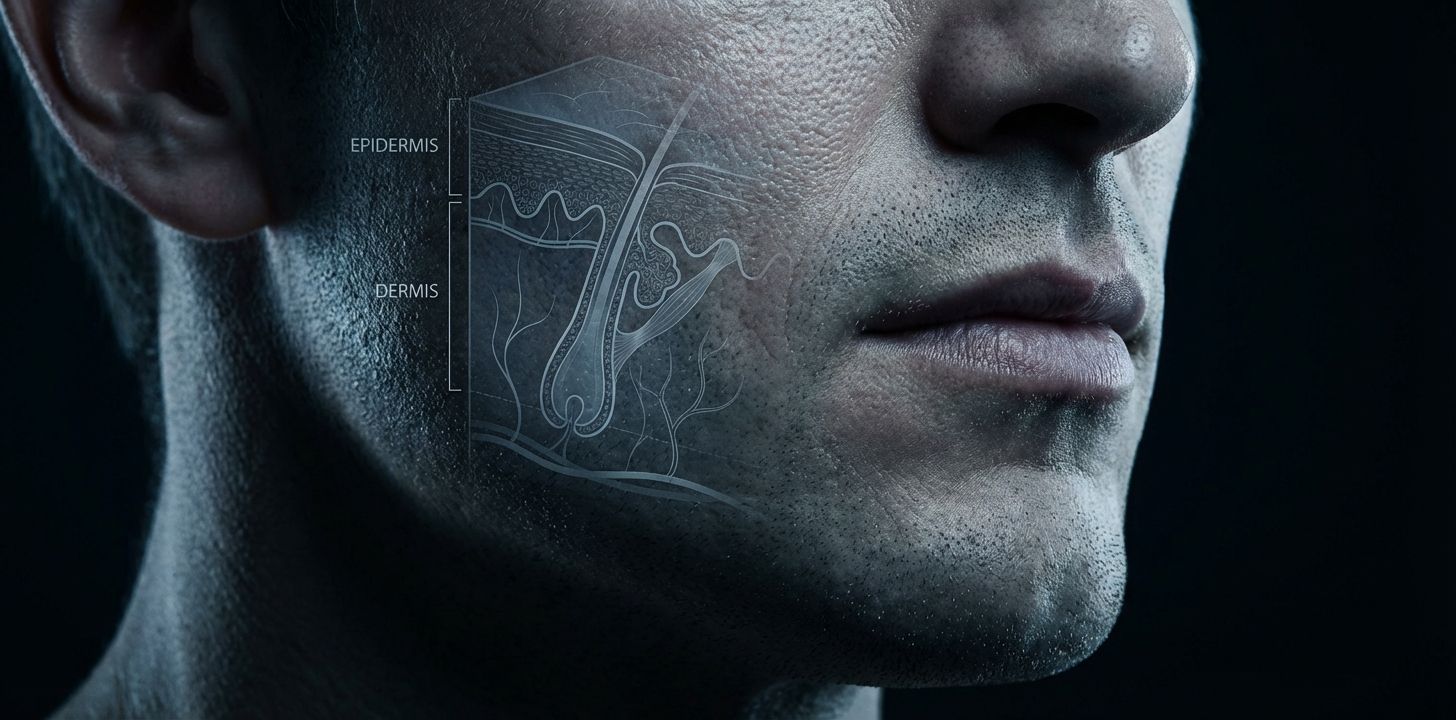
Men's skin is not totally different. It is different in a few ways that matter every day. If you have ever wondered why a product that works for your partner does nothing for you, or why your face gets oily by lunch while your arms feel fine, the answers are straightforward.
This is not a biology lecture. It is a practical explanation of the differences that should change how you choose and use skincare.
By Sam Doyle, Founder, Base Layer
Oil Production
Men's skin produces roughly twice as much sebum as women's skin. That is why your T-zone gets shiny by noon while the rest of your face might feel normal. It is also why heavy, occlusive moisturizers often make things worse for men — they trap oil that your skin is already overproducing.
Higher oil production does not mean you do not need a moisturizer. It means you need a moisturizer that hydrates without adding oil. Ingredients like hyaluronic acid add water-based hydration. Squalane mimics your natural sebum without adding excess. The goal is balance, not suppression.
Stripping oil with harsh cleansers backfires. Your skin compensates by producing even more sebum. That is how men end up in a cycle of oily face, aggressive wash, oilier face.
Barrier Stress From Shaving
Shaving is the single biggest source of barrier stress for men. A razor removes the outermost layer of skin cells along with hair. If you shave three to five times a week, your facial skin is in a near-constant state of micro-injury and repair.
This is why so many men experience redness, irritation, and sensitivity that they do not associate with shaving. The barrier damage accumulates. Products that would be fine on intact skin can sting on a compromised barrier. Alcohol-based aftershaves make it worse.
The practical implication is that men need barrier-supportive moisturizers more than most women do. Ingredients like panthenol and centella asiatica help the skin recover between shaves. Applying moisturizer immediately after shaving is not optional — it is when your skin needs it most.
Thickness And Texture
Men's skin is about 25 percent thicker than women's skin, primarily due to higher collagen density. This sounds like an advantage, and in some ways it is — thicker skin is more resistant to environmental damage and shows signs of aging later.
But thicker skin also means larger pores, coarser texture, and a tendency toward roughness. It also means that lightweight products often absorb better than thick creams. A heavy moisturizer sitting on thick, oily skin creates a layer of film rather than penetrating and hydrating.
Men's higher collagen density also declines steadily with age, rather than the sharp post-menopausal drop women experience. The result is that men age more gradually but with less capacity to recover once the decline starts.
Sun Exposure And Aging
Men are statistically less likely to wear sunscreen and more likely to spend extended time outdoors without protection. The cumulative UV damage adds up. Sun exposure is the number one cause of premature aging — more than genetics, more than diet, more than smoking.
Because men's skin is thicker, UV damage is often invisible until it is significant. By the time you notice dark spots, rough texture, or deep lines, years of damage are already in the skin. Antioxidants like niacinamide help manage some of this damage. But sunscreen is non-negotiable.
A good moisturizer with antioxidant ingredients provides a second line of defense. It will not replace sunscreen, but it supports skin that is already dealing with accumulated exposure.
What This Changes In Product Choice
Men need lightweight, fast-absorbing formulas — not thick creams. They need barrier-repair ingredients because shaving creates damage that women's routines do not account for. They need oil control without stripping, and hydration without heaviness.
Most products marketed to women are formulated for thinner, drier skin with less oil production. Using them is not harmful, but it is not optimal. And most products marketed to men are just generic formulas with masculine packaging and added fragrance — which is arguably worse.
The right product for men addresses oil balance, barrier repair, hydration, and anti-aging in a format that absorbs quickly and works with the skin you actually have. That is what Base Layer is built to do.
Related Ingredients
Related Skin Concerns
You Might Also Like
Base Layer vs Caldera Lab: Disclosed Actives or Botanical Luxury?
Caldera Lab sells a $65 moisturizer called The Base Layer. We're the other Base Layer. Here's an honest ingredient-by-ingredient comparison with real prices.
Chlorine, Cumulative UV Exposure, and the Muscle-Skin Barrier Trade-Off
Stop letting chlorine, 100-mile winds, and severe UV exposure destroy your skin barrier. Base Layer's no-nonsense recovery guide for triathletes.
The Golfer's Skin Strategy: Managing 4-5 Hour Sustained UV, Wind Dehydration, and Hat-Line Pressure Marks
Stop baking deep wrinkles into your face. Reverse 5 hours of fairway sun damage and pesticide exposure with this targeted routine.
Best Moisturizer for Acne-Prone Skin Men (2025 Guide)
FAQs
Reviewed by the Base Layer skincare team. Based on published dermatological research and clinical ingredient data.