Ultra-Dry Cabin Air, Solar Radiation at Altitude, and the Crew Rest Paradox
By Base Layer Team, Skincare Science & Formulation
Key Takeaways
Survive the recycled cabin air and high-altitude UV rays. Erase pilot fatigue with this targeted skincare routine.
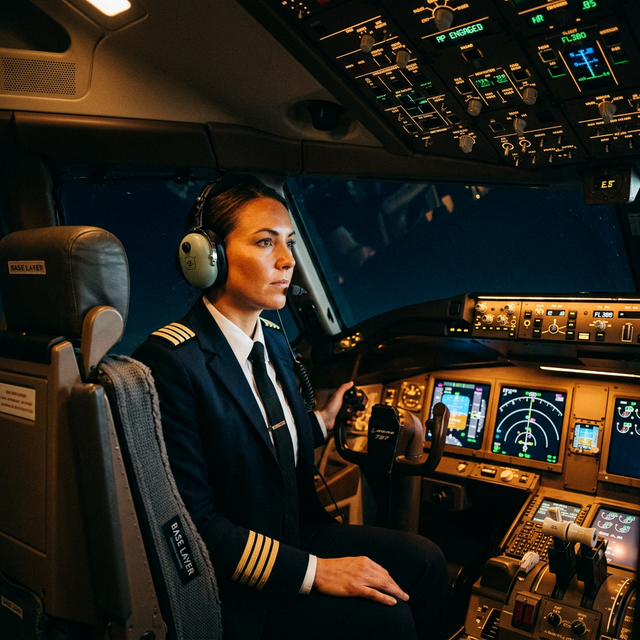
Flying at 35,000 feet isn't just exhausting; it is an active assault on your cellular structure.
The air inside a commercial cockpit averages less than 10% humidity, violently extracting the moisture from your skin. Above the cloud cover, the massive windshields offer very little protection from the intense, magnified UV radiation pouring in. Combined with complex sleep disruption and extreme 'crow's feet' from constantly squinting at displays, you are aging at twice the speed of your passengers.
Why Standard Moisturizers Evaporate at 10% Cabin Humidity
You cannot survive thousands of hours of flight time using generic hotel lotion or doing nothing at all.
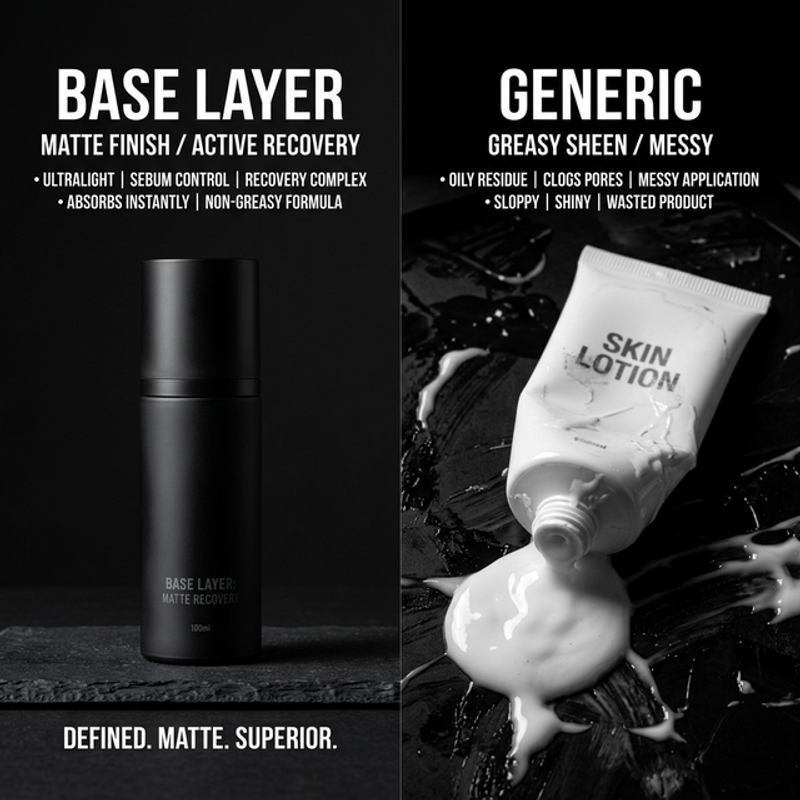
Standard moisturizers are formulated for sea-level environments; they evaporate within an hour in the hyper-dry cockpit air, leaving your skin exposed and tight. Heavy creams just sit visibly on your face, causing an unprofessional, greasy shine under the cockpit lights without actually penetrating to deliver structural hydration.
The Cockpit Moisture Protocol: Layer-Based Defense
Base Layer serves as a high-performance, synthetic insulation layer for the cockpit.
It utilizes **Hyaluronic Acid** to force water back into the deep tissue, actively combating the rapid evaporation caused by the cabin pressure. To address the mechanical aging from squinting into the sun, the formula deploys advanced **Peptides**—specialized amino acids that physically signal your skin to rebuild collagen and tighten the exhausted skin around your eyes.
TSA-approved and engineered for efficiency, it completely absorbs in 30 seconds for an absolute matte finish. Look sharp, professional, and entirely unfazed by the altitude.
Summary Protocol for Commercial Pilots
Core problems at altitude
- Cabin humidity ~10–15% → TEWL 3–4× normal → barrier breakdown by 8–10 hours.
- UV exposure at cruising altitude ≈ full-time tropical outdoor work.
- Circadian disruption → less growth hormone, more cortisol → impaired repair + faster collagen loss.
- Eye area: thin skin + constant squinting + dryness → accelerated crow’s feet.
Daily Flight-Day Routine
Morning / Pre-flight (≈2 hours before departure)
- Cleanse (optional if not oily/dirty)
- Gentle, non-foaming cleanser; lukewarm water; pat dry.
- Layer 1 – Hydrating Serum
- Apply a 2% hyaluronic acid serum to slightly damp skin (use a light mist if needed).
- Cover entire face, including around eyes.
- Layer 2 – Base Moisturizer (Barrier Support)
- Use Base Layer Performance Daily Face Cream as Layer 2.
- Key actives: Niacinamide 5%, Panthenol 5%, Ceramides.
- Apply a thin, even layer over face and neck; allow ~10–15 seconds to absorb to a matte finish.
- Eye Area Targeting
- Re-apply a small amount of Layer 1 (HA serum) around the eyes.
- If using Copper Peptide GHK-Cu serum, tap a thin layer into crow’s feet area once daily (AM or PM, be consistent).
- UV Protection (Critical at Altitude)
- Apply SPF 50+ mineral sunscreen (zinc oxide + titanium dioxide) over face, ears, and neck.
- Allow full absorption before duty (no shine, no white cast as much as possible).
In-Flight Protocol
Every ~4 hours:
- Light Rehydration
- Use a facial mist (non-fragranced, no strong actives) to lightly dampen skin.
- Reapply Layer 1
- Apply a small amount of 2% hyaluronic acid serum over the lightly misted skin.
- Focus on high-evaporation zones: cheeks, temples, around eyes.
- Keep application thin to avoid shine in the cockpit.
Every ~2 hours during daylight segments:
- Reapply SPF 50+ mineral sunscreen
- Especially if sunlight is coming through cockpit windows.
- For a 13-hour transpacific flight, aim for 4–5 reapplications.
If extreme dryness develops mid-flight:
- Layer 3 – Targeted Occlusive
- Use a product or blend with pure ceramides + squalane.
- Tap a very thin layer only on:
- Cheeks
- Temples
- Crow’s feet / outer eye area
- Avoid T-zone if you’re prone to shine.
Post-Flight (On Arrival)
- Gentle Cleanse
- Remove sunscreen, sweat, and cabin pollutants with a mild cleanser.
- Full 3-Layer Hydration Routine
- Layer 1: 2% hyaluronic acid serum on damp skin (face + eye area).
- Layer 2: Base Layer Performance Daily Face Cream over entire face and neck.
- Layer 3 (if very dry or long duty day):
- Thin layer of ceramides + squalane on cheeks, temples, around eyes.
- Nighttime Recovery (Before Sleep)
- Repeat Layer 1 + Layer 2.
- Add a heavier occlusive (e.g., thicker ceramide/squalane balm) on driest areas before bed.
- If using Copper Peptide GHK-Cu, this is an ideal time to apply to crow’s feet.
Frequency & Expectations
- Barrier maintenance: With consistent use, you counteract the 3–4× TEWL and keep barrier function closer to baseline across multi-leg trips.
- Crow’s feet / fine lines: Copper peptide GHK-Cu around eyes can yield ~20–30% improvement in fine lines over 8–12 weeks.
- Long-term aging: This protocol + strict SPF 50+ mineral protection significantly reduces the 15–20 year acceleration in photoaging typically seen in unprotected cockpit exposure.
Minimal Effective Kit for Pilots
- Layer 1: 2% Hyaluronic Acid Serum (face + eye area).
- Layer 2: Base Layer Performance Daily Face Cream (50 ml, TSA-friendly).
- SPF: SPF 50+ mineral sunscreen (zinc oxide + titanium dioxide).
- Optional:
- Copper Peptide GHK-Cu serum for crow’s feet.
- Ceramide + squalane balm for Layer 3 and night occlusion.
- Simple facial mist for in-flight rehydration.
Use this exact structure on all flight days: Pre-flight protect → In-flight maintain → Post-flight repair.
Performance Daily Face Cream ($38 for 50ml) combines Niacinamide 5%, Hyaluronic Acid, and Copper Peptide GHK-Cu in a single layer that absorbs in 15 seconds. Fragrance-free. Built for extreme dryness conditions like cockpit air.
Related Ingredients
Related Skin Concerns
You Might Also Like
Base Layer vs Caldera Lab: Disclosed Actives or Botanical Luxury?
Caldera Lab sells a $65 moisturizer called The Base Layer. We're the other Base Layer. Here's an honest ingredient-by-ingredient comparison with real prices.
Chlorine, Cumulative UV Exposure, and the Muscle-Skin Barrier Trade-Off
Stop letting chlorine, 100-mile winds, and severe UV exposure destroy your skin barrier. Base Layer's no-nonsense recovery guide for triathletes.
The Golfer's Skin Strategy: Managing 4-5 Hour Sustained UV, Wind Dehydration, and Hat-Line Pressure Marks
Stop baking deep wrinkles into your face. Reverse 5 hours of fairway sun damage and pesticide exposure with this targeted routine.
Best Moisturizer for Acne-Prone Skin Men (2025 Guide)
Reviewed by the Base Layer skincare team. Based on published dermatological research and clinical ingredient data.